
Polished Concrete Floors — Grinding, Honing, and Finishing Done Right

Rose Restoration delivers polished concrete systems for warehouses, lobbies, retail spaces, offices, and industrial facilities across Virginia, Maryland, and Washington DC. We handle everything from slab evaluation to final polish — including the prep work most contractors skip.

Get a Free Site Assessmentor call 703-327-7676

Polished Concrete Floors in Virginia, Maryland, and DC

Polished concrete is one of the most durable, low-maintenance, and visually striking flooring options available for commercial and residential spaces. Rose Restoration provides professional concrete polishing services throughout Virginia, Maryland, and Washington, DC, transforming ordinary concrete slabs into high-performance finished floors. With over 40 years of experience and a team of more than 30 technicians, we deliver polished concrete floors that meet specification, look exceptional, and stand up to heavy use.

Whether you are a building owner upgrading a lobby, a general contractor finishing a retail space, or a homeowner who wants the clean aesthetic of polished concrete in your home, Rose Restoration has the equipment, expertise, and crew depth to handle your project.

The Concrete Polishing Process

Polished concrete is not a coating or a surface treatment — it is a mechanical process that refines the concrete slab itself using progressively finer diamond tooling. The result is a floor that is harder, denser, and more reflective than the original concrete. Here is how the process works, step by step.

Step 1: Surface Preparation and Grinding

The process begins with coarse diamond tooling mounted on planetary grinders. These initial passes remove surface imperfections, lippage between adjacent pours, minor coatings or adhesive residue, and any existing sealers. The grit level typically starts between 30 and 80 grit, depending on the condition of the slab and the desired aggregate exposure. This is the most aggressive phase of the process and generates the most dust, which is captured by industrial vacuum and dust extraction systems connected to the grinders.

Step 2: Honing

After the initial grinding establishes a flat, uniform surface, we progress through a series of intermediate diamond grits — typically 100, 200, and 400 grit. Each pass refines the scratch pattern left by the previous grit, gradually smoothing the surface. Honing is where the floor begins to develop a slight sheen and the surface starts to feel smooth to the touch. Any crack repairs, joint filling, or patching is typically completed during the honing phase so that repair materials are polished in with the surrounding concrete.

Step 3: Densifying

Between the honing and polishing phases, we apply a chemical densifier — a liquid hardener that penetrates the concrete and reacts with the free calcium hydroxide in the slab to form calcium silicate hydrate. This chemical reaction makes the concrete harder, more abrasion-resistant, and less porous. Densifying is a critical step that determines how well the floor will accept a final polish and how long it will maintain its appearance under traffic.

Step 4: Polishing

With the densified surface prepared, we switch from metal-bond to resin-bond diamond tooling and continue progressing through finer grits — typically 800, 1500, and 3000 grit. Each pass increases the reflectivity and clarity of the floor. The final grit level determines the gloss level of the finished floor, from a low satin sheen to a high-gloss mirror finish.

Step 5: Guarding

The final step is the application of a guard or protective treatment. This is a thin stain-resistant coating that fills the microscopic pores remaining in the polished surface, making the floor easier to clean and more resistant to spills and stains. Guard products are not thick film coatings — they do not change the appearance of the floor but do improve its day-to-day performance and maintainability.

Aggregate Exposure Levels

One of the key design decisions in polished concrete is how much of the aggregate (the stone within the concrete mix) is revealed during the grinding process. The three standard exposure levels are:

  • Cream or Class A finish: Minimal grinding that leaves the paste surface largely intact with little to no aggregate visible. This produces a clean, uniform appearance and is common in residential applications and spaces where a subtle look is desired.
  • Salt-and-pepper or Class B finish: Moderate grinding that exposes the fine aggregate just below the cream layer. This is the most popular commercial finish, offering visual texture without the bold look of full aggregate exposure.
  • Full aggregate or Class C finish: Deep grinding that exposes the large stone aggregate within the concrete mix. This produces a dramatic, terrazzo-like appearance and is often specified in lobbies, showrooms, and high-end retail environments.

The appropriate exposure level depends on the design intent, the concrete mix, and the condition of the slab. During our initial assessment, we evaluate the existing concrete and advise on which exposure levels are achievable and appropriate.

Gloss Levels

Gloss is measured in units using a gloss meter, and polished concrete floors are typically categorized into three ranges:

  • Low or satin sheen (Level 1): A soft, matte-to-low sheen achieved by stopping the polishing sequence at 400 or 800 grit. This level is popular in industrial and warehouse settings where appearance matters but high reflectivity is not required.
  • Medium sheen (Level 2): A noticeable but not dramatic reflectivity achieved by polishing to 1500 grit. This is a versatile finish common in offices, retail, and multi-use commercial spaces.
  • High gloss (Level 3): A mirror-like reflectivity achieved by polishing to 3000 grit or higher. This finish is striking in lobbies, showrooms, and upscale environments but requires more careful maintenance to keep looking its best.

Polished Concrete for Commercial Spaces

Polished concrete has become a preferred flooring choice in a wide range of commercial environments because of its durability, low maintenance requirements, and aesthetic versatility.

  • Retail: Polished concrete provides a clean, modern backdrop that does not compete with merchandise displays. It handles heavy foot traffic and rolling loads without the wear patterns that carpet and VCT develop over time.
  • Office buildings: Building owners and property managers appreciate polished concrete for its long lifespan and low maintenance costs compared to carpet, tile, or sheet goods. It does not harbor allergens and contributes to improved indoor air quality.
  • Warehouses and distribution centers: Polished and densified concrete resists forklift traffic, abrasion from pallet jacks, and chemical spills better than untreated concrete. The hardened surface also reduces dusting, which is important in facilities that store products or food.
  • Restaurants and hospitality: Polished concrete is easy to clean, resists staining when properly guarded, and provides the industrial-modern aesthetic that many restaurant and hotel designers seek.
  • Educational and institutional: Schools, libraries, and government buildings benefit from the long lifecycle and low maintenance costs of polished concrete, which can last decades without replacement.

Residential Polished Concrete

Polished concrete is increasingly popular in residential settings, particularly in modern and contemporary homes. Homeowners choose polished concrete for its clean lines, compatibility with radiant heating systems, and hypoallergenic surface. In residential applications, we pay special attention to crack repair, color uniformity, and the integration of polished concrete with adjacent flooring materials. We also work carefully around existing finishes, cabinetry, and fixtures in renovation projects.

Staining and Polished Concrete

Concrete staining can be combined with polishing to add color and visual depth. Acid-based stains create mottled, translucent color effects that react with the minerals in the concrete. Water-based stains offer more consistent color and a wider palette. Staining is typically applied during the honing phase, before the final polishing steps, so the color is locked into the surface and protected by the subsequent polish and guard treatment.

Stained and polished concrete is popular in retail spaces, restaurants, residential living areas, and any environment where design and durability need to coexist.

When Polishing Is and Is Not Appropriate

Polished concrete is a versatile solution, but it is not the right answer for every situation. Here are some considerations:

Polishing works well when:

  • The existing slab is structurally sound with no major cracking or settlement
  • The concrete mix contains hard aggregate that will take a good polish
  • The environment is climate-controlled (extreme moisture or temperature swings can affect performance)
  • The owner values long-term durability and low lifecycle cost over short-term price

Polishing may not be appropriate when:

  • The slab has extensive structural cracking, heaving, or settlement that cannot be addressed through repair
  • The concrete contains soft aggregate (such as river rock in some regions) that does not polish cleanly
  • The slab has been heavily contaminated with oils or chemicals that have penetrated deep into the concrete
  • The space requires specific chemical resistance that would be better served by a resinous coating system

During our initial consultation, we evaluate the slab condition and advise honestly on whether polishing is the right approach or whether an alternative system would better serve your needs.

Polished Concrete vs. Other Flooring

Compared to other commercial flooring options, polished concrete offers significant advantages in lifecycle cost and durability. Unlike VCT, carpet, or sheet vinyl, polished concrete does not need to be replaced every 7 to 15 years. Unlike tile, it has no grout lines to maintain. Unlike hardwood, it is not vulnerable to moisture damage. And unlike epoxy coatings, polished concrete does not peel, delaminate, or require recoating on a set schedule.

The initial cost of polished concrete is competitive with mid-range flooring options, and when lifetime costs are considered — including maintenance, replacement, and downtime — it is often the most economical choice over a 20- to 30-year building lifecycle.

Maintenance

One of the strongest arguments for polished concrete is its low maintenance requirements. Daily maintenance consists of dust mopping or auto-scrubbing with a neutral cleaner. There is no need for waxing, stripping, or recoating on a regular schedule. Periodic reapplication of guard product — typically every one to three years depending on traffic — maintains the floor’s stain resistance and ease of cleaning.

Rose Restoration offers maintenance programs for polished concrete floors, including periodic cleaning, guard reapplication, and spot repair of any damage that occurs during the life of the floor.

Frequently Asked Questions

How long does it take to polish a concrete floor?

The timeline depends on the size of the area, the condition of the existing slab, and the specified finish level. A typical commercial project of 5,000 to 10,000 square feet takes approximately one to two weeks. Larger projects are scheduled based on phasing and access. We provide detailed timelines during the estimating process.

Can any concrete slab be polished?

Most concrete slabs can be polished, but the results depend on the quality of the original concrete mix, the condition of the slab, and the aggregate type. We evaluate each slab before beginning work and advise on what finish levels are realistically achievable. Slabs with severe structural damage, very soft aggregate, or deep contamination may be better candidates for overlay systems or coatings.

Is polished concrete slippery?

Polished concrete has a coefficient of friction comparable to other common commercial flooring materials. When dry, it is not considered slippery. When wet, like any smooth floor, it can become slick. In areas where wet conditions are expected, we can incorporate anti-slip treatments or recommend alternative finish levels that provide additional traction.

How does polished concrete compare in cost to epoxy flooring?

The installed cost of polished concrete and epoxy flooring systems can be similar, depending on the specification. However, polished concrete typically has lower long-term maintenance costs because it does not require periodic recoating. Epoxy systems offer advantages in chemical resistance and color options. We can help you evaluate which system is the better fit for your application. Learn more about our resinous flooring services.

Do you work as a subcontractor for general contractors?

Yes. A significant portion of our polished concrete work is performed as a subcontractor to general contractors on new construction and renovation projects. We provide full estimating support, submittals, and closeout documentation. Visit our concrete contractor page to learn more about working with us.

Ready to explore polished concrete for your project? Contact Rose Restoration or call 703-327-7676 for a free consultation and estimate.

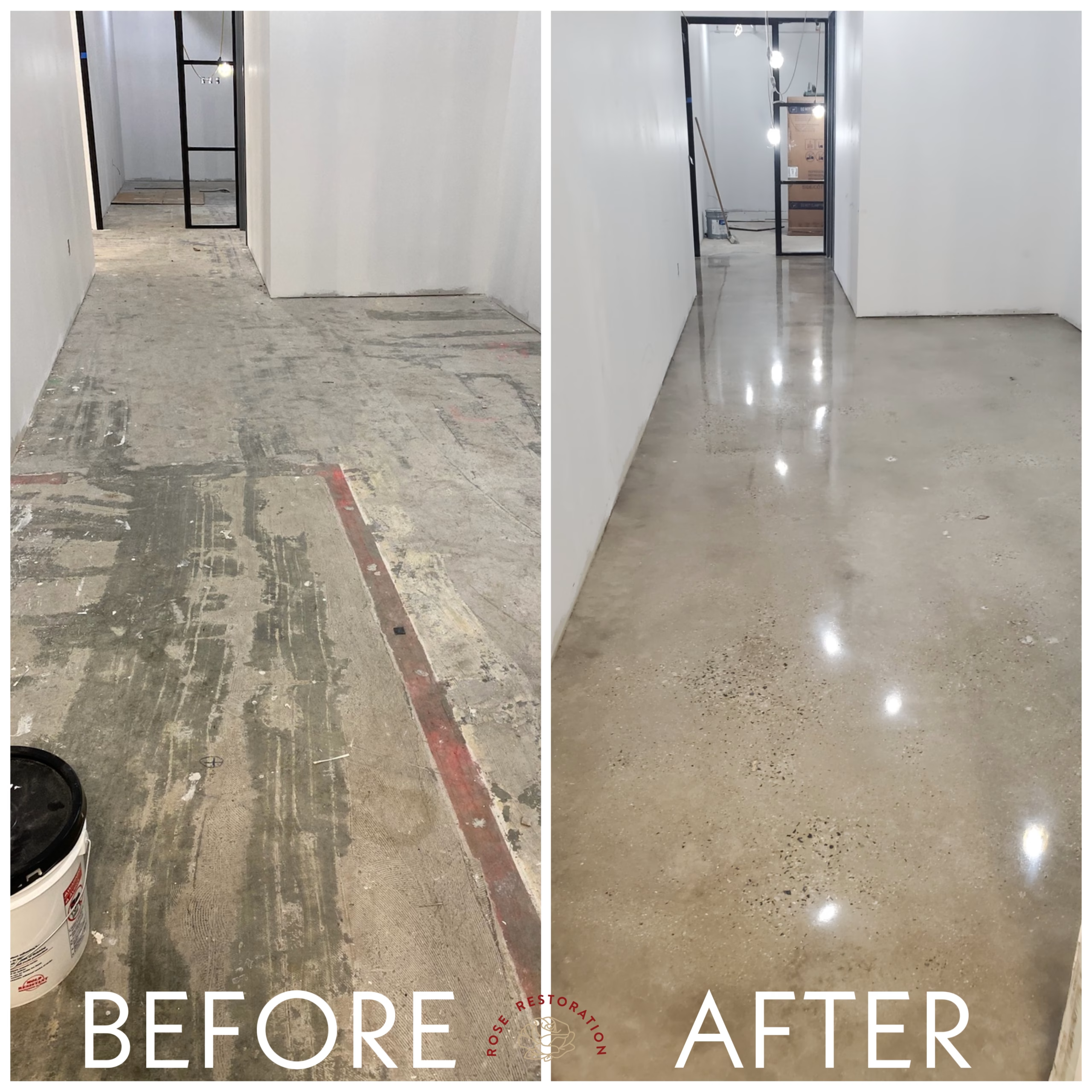
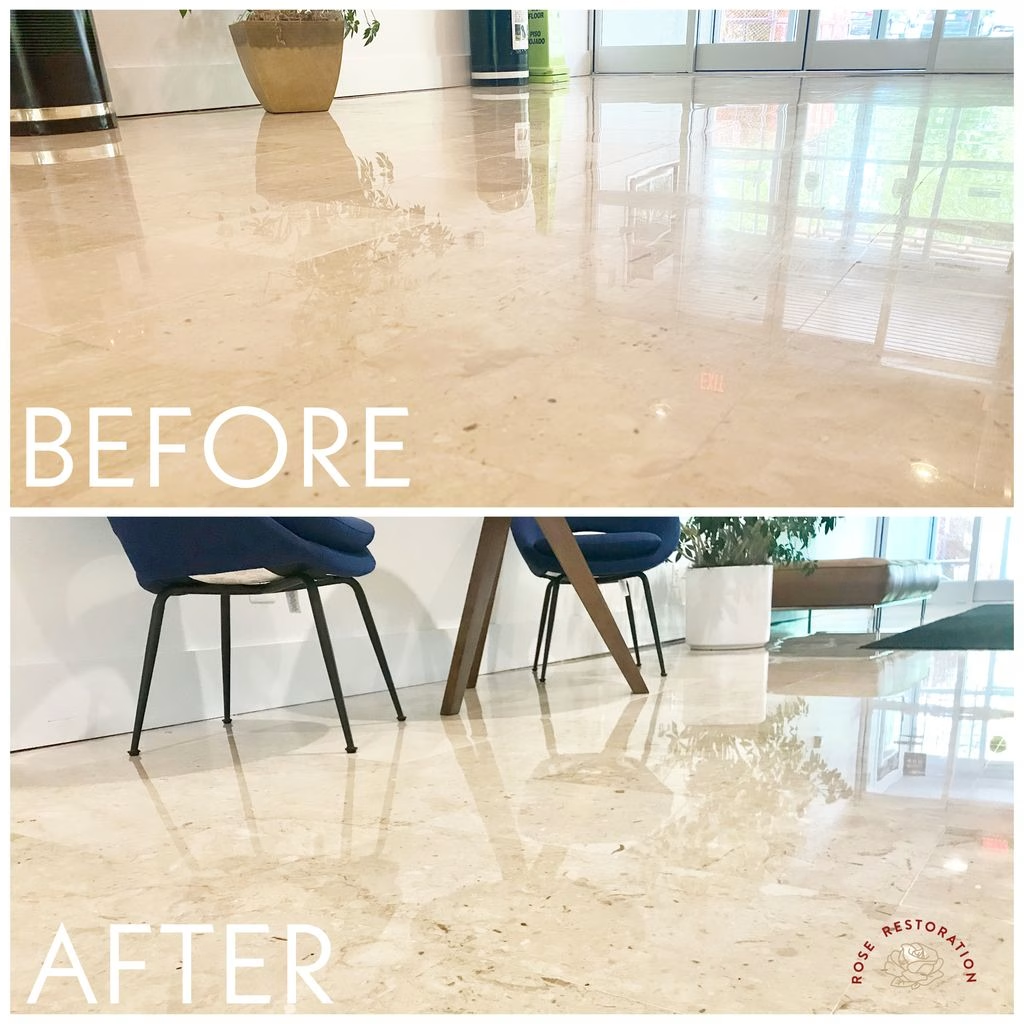
Polished Concrete — Before and After

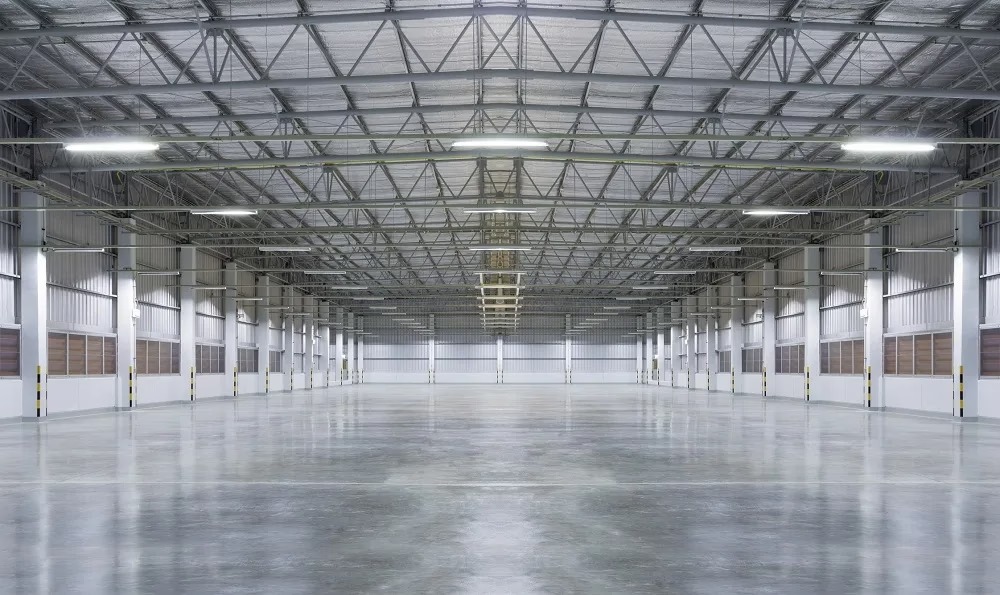
Before after concreteCommerical floor before&AfterPolished concrete floor in a commercial warehouse facility showing high-gloss reflective finish

Ready to Discuss Your Concrete Floor?

Every project starts with a conversation and a site visit. We evaluate your slab, discuss your goals, and give you a clear picture of what to expect.

Get a Free Site Assessmentor call 703-327-7676

Concrete Polishing vs. Other Floor Finishes

Polished Concrete vs. Grind and Seal

Polished concrete uses progressively finer diamond grits to mechanically refine the surface to a high-gloss finish — the shine comes from the concrete itself. Grind and seal uses coarser diamonds to prepare the surface, then applies a topical sealer or coating for the final appearance. Polished concrete is more durable and never needs re-coating, while grind and seal offers more decorative options but requires periodic reapplication. Read our full comparison: Polished Concrete vs. Grind & Seal.

Polished Concrete vs. Epoxy

Epoxy flooring applies a resinous coating over concrete, while polished concrete refines the concrete surface itself. Epoxy offers unlimited color and pattern options and is ideal for garages, industrial facilities, and food processing areas. Polished concrete is more natural, requires less maintenance, and is better suited for retail, office, and residential spaces where aesthetics and low maintenance matter most.

Polished Concrete vs. Tile or Stone

Polished concrete eliminates grout lines, requires no waxing or stripping, and is significantly less expensive than natural stone or high-end tile. For large commercial spaces, polished concrete delivers a premium look at $5–$12 per square foot compared to $15–$50+ for stone or quality tile installed.

Concrete Polishing Cost

Service Cost Range
Basic concrete polishing (cream finish) $3 – $6 per sq ft
Medium exposure (salt & pepper) $5 – $9 per sq ft
Full aggregate exposure $8 – $15 per sq ft
Grind and seal $4 – $8 per sq ft
Concrete staining + polish $6 – $12 per sq ft
Surface prep / grinding only $2 – $5 per sq ft

Final cost depends on floor condition, desired finish level, square footage, and accessibility. New construction concrete polishing is typically less expensive than retrofitting existing floors that need coating removal or extensive repair first.

Request a Concrete Polishing Quote

Where We Polish Concrete

Rose Restoration provides concrete polishing for both commercial and residential spaces:

We also provide concrete polishing as a subcontractor for general contractors on new construction and renovation projects.

Concrete Polishing FAQ

How much does concrete polishing cost per square foot?

Concrete polishing ranges from $3–$15 per square foot depending on the desired finish level, floor condition, and project size. Basic cream polish (minimal aggregate exposure) starts at $3–$6/sqft. Full aggregate exposure with high-gloss finish runs $8–$15/sqft. Most commercial projects fall in the $5–$9/sqft range.

How long does polished concrete last?

Polished concrete is one of the most durable flooring options available. With proper maintenance, a polished concrete floor can last the lifetime of the building — 20+ years without recoating or major refinishing. Periodic burnishing (every 1–3 years depending on traffic) maintains the shine. No waxing, stripping, or recoating is ever needed.

Can any concrete floor be polished?

Most concrete floors can be polished, but the result depends on the concrete's condition, age, and composition. Floors with severe cracking, spalling, or moisture issues may need repair work before polishing. Very soft or low-strength concrete may not take a high polish. Our team assesses every floor before beginning to determine what finish level is achievable.

What is the difference between polished concrete and grind and seal?

Polished concrete mechanically refines the concrete surface to a natural shine using progressively finer diamond grits — no coating is applied. Grind and seal prepares the surface with coarser diamonds, then applies a topical sealer for the final look. Polished concrete is more durable and maintenance-free. Grind and seal offers more decorative color options but requires periodic resealing every 2–5 years.

Do you provide concrete polishing for residential homes?

Yes. Residential concrete polishing has become increasingly popular for basements, garages, main living areas, and new construction. Polished concrete offers a modern aesthetic, is hypoallergenic (no grout lines or carpet fibers), and is extremely easy to maintain. We serve homeowners throughout Northern Virginia, Maryland, and Washington DC.

Concrete Polishing Service Areas

Rose Restoration provides concrete polishing and floor grinding services throughout the Washington DC metropolitan area including Arlington, Fairfax County, Loudoun County, Bethesda, Montgomery County, Georgetown, Capitol Hill, and all of Northern Virginia, Maryland, and Washington DC.

Contact Us for a Free Estimate

Call Now Get a Quote