
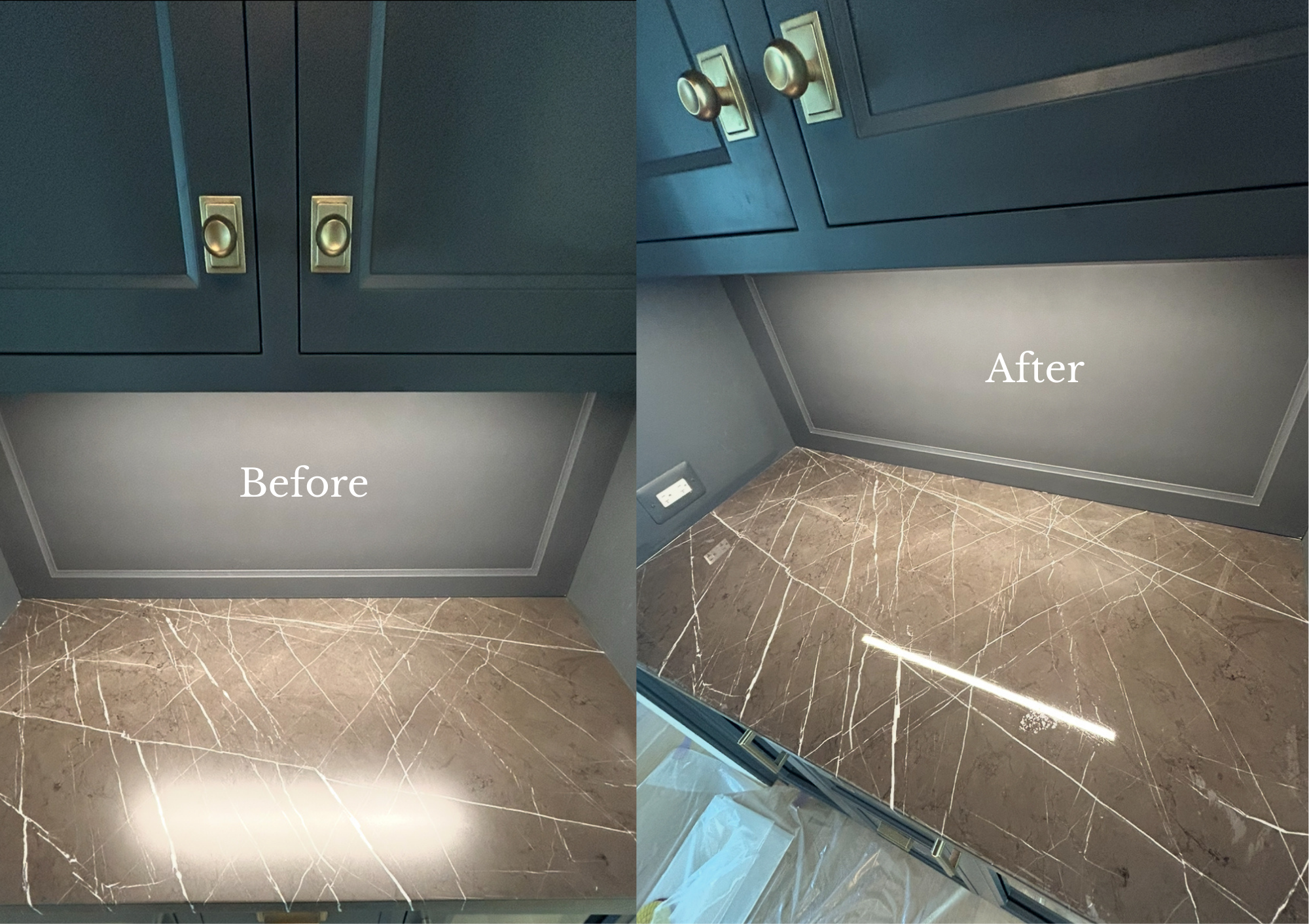
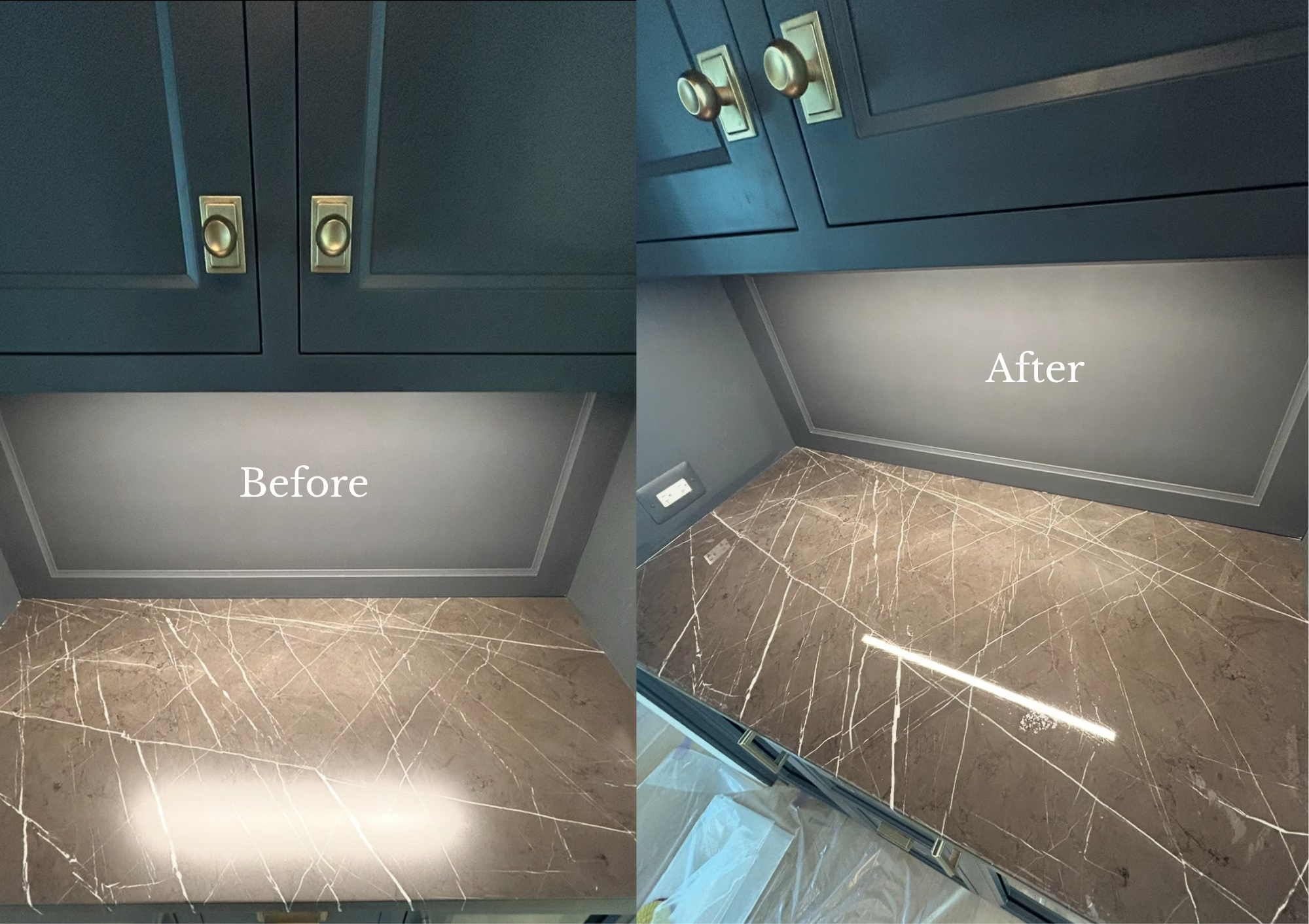
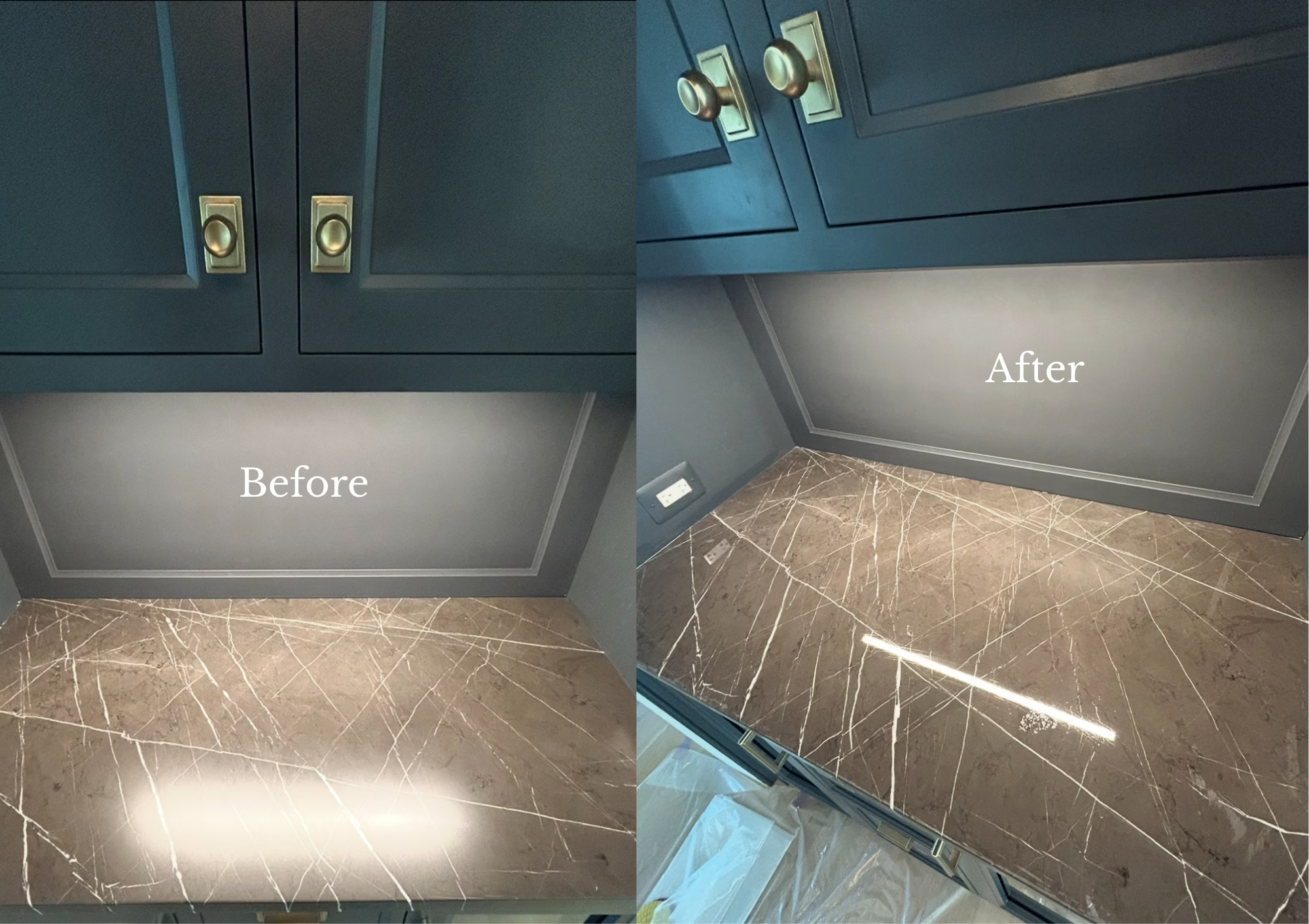
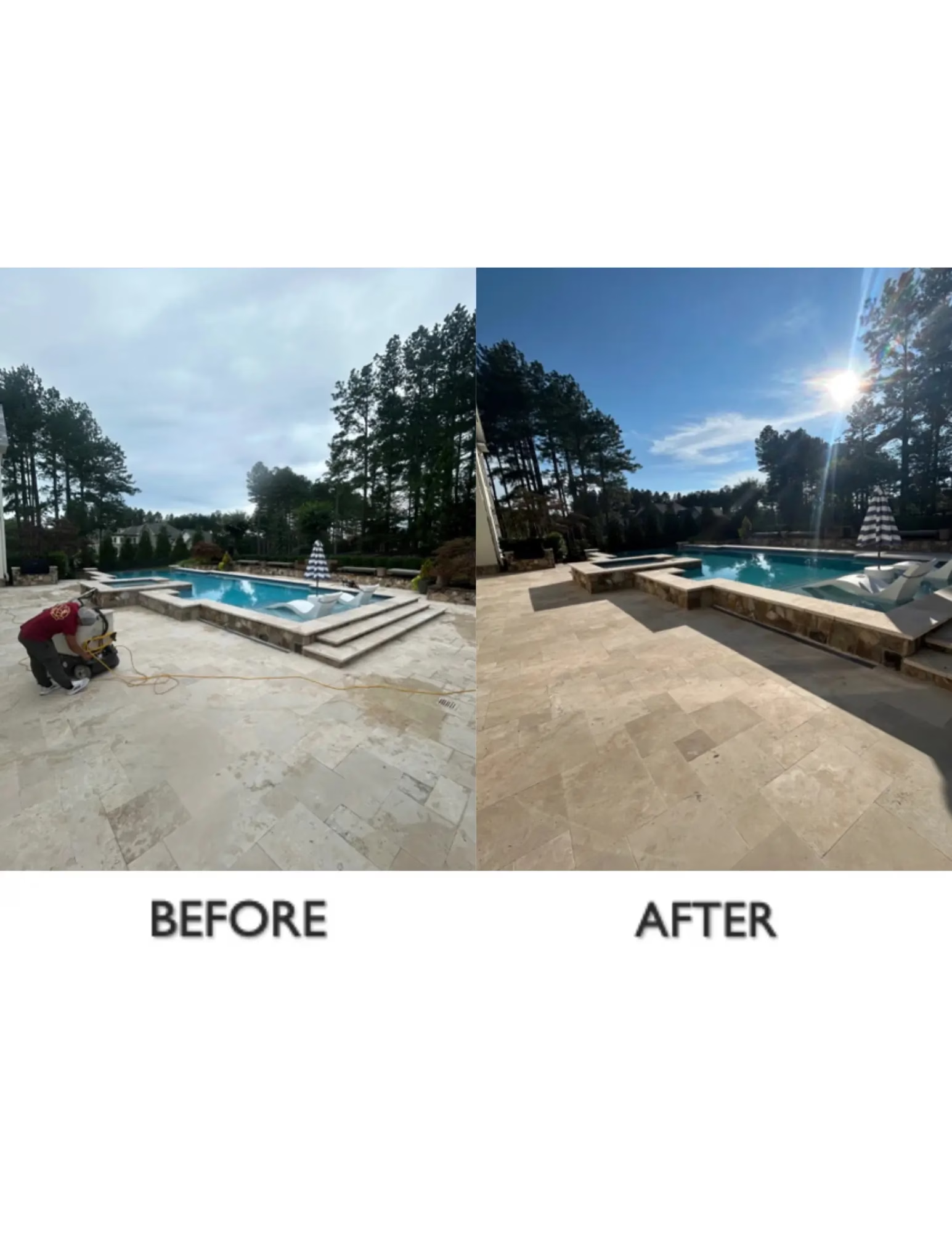
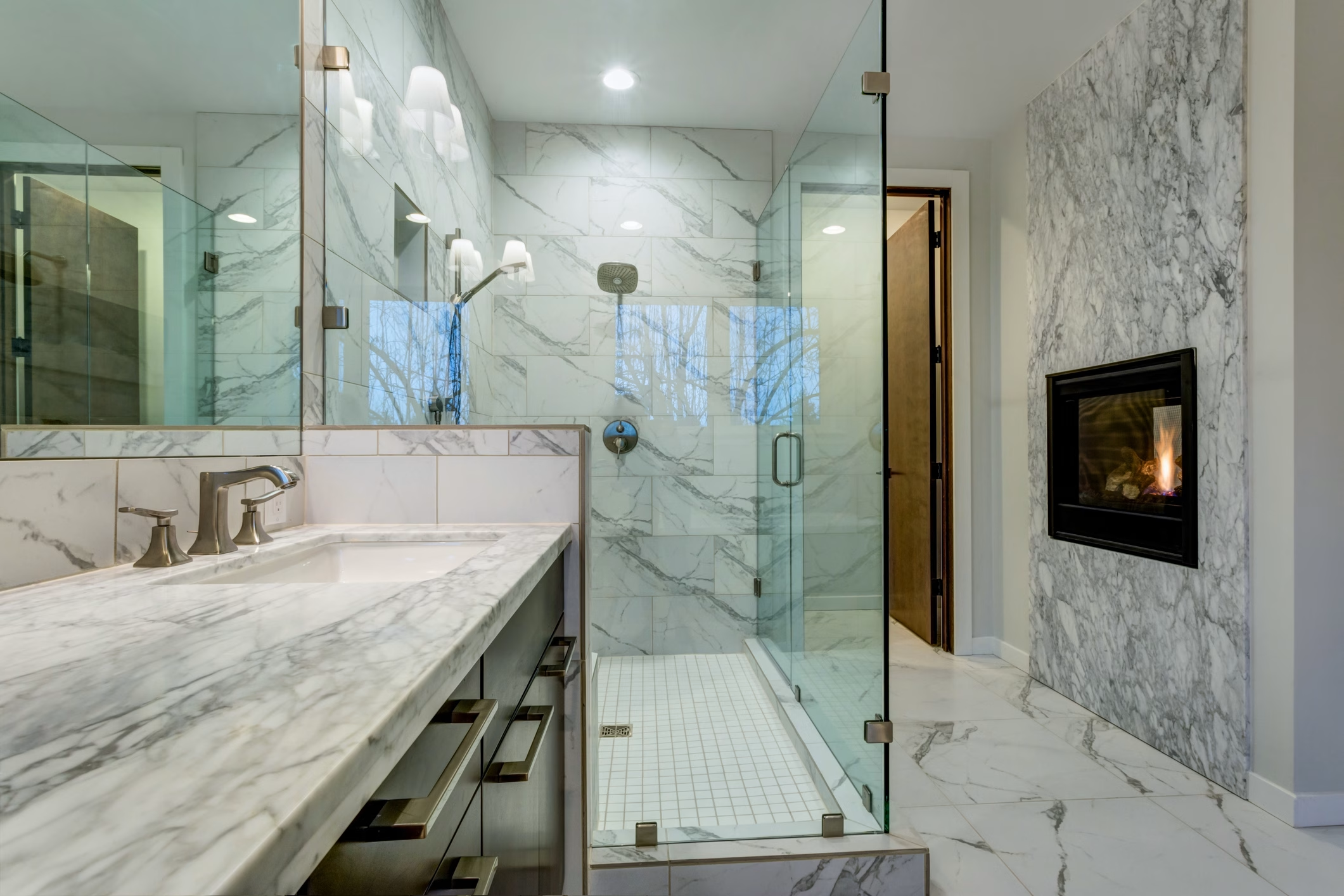
Rose Restoration handles marble restoration across all property types — from hotel lobbies and office buildings to private residences and luxury homes. The same professional-grade diamond abrasive equipment and 40+ years of expertise apply whether the project is a 10,000-square-foot commercial lobby or a homeowner's kitchen countertop. Our process delivers the same quality results at any scale.
For homeowners looking for countertop polishing, floor restoration, shower repair, or vanity honing, visit our residential marble restoration page for detailed residential services and pricing. For countertop restoration including chip repair, stain removal, and re-polishing, we serve both residential and commercial clients throughout Virginia, Maryland, and Washington DC.
Etching occurs when acidic substances — lemon juice, vinegar, wine, tomato sauce, and most household cleaning products — dissolve the calcium carbonate in marble, leaving dull spots or rings. Etching is surface-level chemical damage, not a stain. It requires mechanical honing and polishing with diamond abrasives to restore the finish. See our full guide to fixing etched marble.
Unlike etching, stains are discolorations that penetrate below the surface of the stone. Oil-based stains from cooking oils and cosmetics darken the marble. Organic stains from coffee, wine, and food leave brown or pink marks. Rust stains from metal objects leave orange-brown discoloration. Professional poultice treatments draw stains out of the stone over 24–48 hours without damaging the surface.
Foot traffic, furniture movement, and abrasive cleaning gradually wear down marble's polished surface. High-traffic areas develop dull paths and uneven sheen. Diamond honing removes the damaged layer and re-establishes a uniform finish across the entire surface.
Impact damage from dropped objects, settling of the substrate, and thermal stress can cause chips and cracks. We repair these using color-matched polyester or epoxy resin, ground flush and polished to match the surrounding stone. The result is a virtually invisible repair.
Marble replacement is expensive, disruptive, and often unnecessary. Professional restoration delivers the same visual result at a fraction of the cost.
| Restoration | Replacement | |
|---|---|---|
| Countertop | $500 – $2,500 | $5,000 – $20,000+ |
| Floors (per sq ft) | $5 – $18 | $15 – $50+ |
| Timeline | Hours to days | Weeks |
| Disruption | Minimal | Major construction |
| Matching risk | None | High (quarry variations) |
Restoration saves 70–90% versus replacement, avoids demolition and construction, eliminates the risk of not finding matching stone, and produces a result that is visually indistinguishable from new marble. Replacement is only necessary when severe structural damage has compromised the substrate beneath the stone.
Rose Restoration has over 40 years of experience with virtually every marble variety available. We assess each stone individually and tailor our restoration approach to the specific material.
Cost depends on surface type, project size, and extent of damage. Residential countertop restoration typically runs $500–$2,500 for a standard kitchen. Marble floor restoration ranges from $5–$18 per square foot. Commercial lobby projects range from $10,000–$50,000+ depending on scope. In all cases, restoration costs 70–90% less than replacement. Rose Restoration provides free on-site assessments with detailed written estimates.
Yes, most marble stains can be removed through professional treatment. Oil-based stains and organic stains respond well to poultice treatments that draw the stain out over 24–48 hours. Rust stains require specialized chemical treatment. It is important to distinguish staining from etching — etch marks are dull spots caused by acid and require mechanical polishing, not chemical cleaning.
Residential countertops typically need professional polishing every 2–5 years. High-traffic commercial floors may need annual polishing. Residential floors in moderate-traffic areas can go 3–7 years between professional visits. Regular maintenance with pH-neutral cleaners extends the interval.
Both are diamond abrasive processes that produce different finish levels. Honing creates a smooth, matte finish that hides etch marks well. Polishing continues to higher grits for a high-gloss, mirror-like finish. Most restoration begins with honing, then the client chooses their finish level. Read our full guide: Honed vs. Polished Marble.
Yes. Impregnating sealer should be applied after every restoration to protect against staining. Most marble should be resealed every 1–2 years. Sealers protect against stains but do not prevent etching — for countertops exposed to cooking acids, consider Marble Armor for complete protection.
Yes. We repair chips and cracks using color-matched resin that is ground flush and polished to match the surrounding stone. The result is a virtually invisible repair. Individual chip repairs typically cost $250–$750.
Countertop restoration takes 3–8 hours. Bathroom vanity tops take 2–4 hours. Residential floor restoration (200–400 sq ft) takes 1–3 days. Commercial projects are scheduled during off-hours to minimize disruption. Surfaces are typically usable within 2–4 hours of sealing.
Restoration is almost always the better investment — 70–90% less than replacement, no construction disruption, no risk of mismatched stone, and a result that looks like new. Replacement is only necessary when structural damage has compromised the substrate beneath the stone.
Rose Restoration has served the Washington DC metropolitan area for over 40 years. We provide marble restoration, polishing, and repair throughout:
Northern Virginia — McLean, Great Falls, Arlington, Alexandria, Vienna, Tysons, Reston, Fairfax, Ashburn, and all of Fairfax County and Loudoun County.
Maryland — Bethesda, Chevy Chase, Potomac, Rockville, Silver Spring, and all of Montgomery County. Also serving Annapolis, Baltimore, and Frederick.
Washington DC — Georgetown, Capitol Hill, Northwest DC, Embassy Row, Dupont Circle, and all DC neighborhoods.