
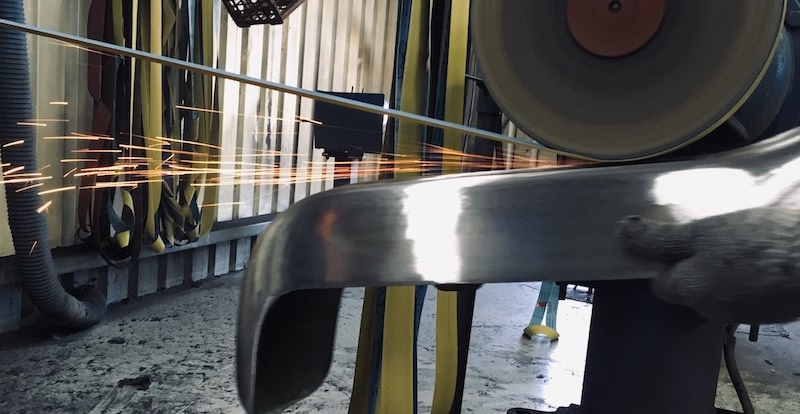
At Rose Restoration, we deliver premium commercial metal restoration and polishing services tailored to support general contractors, property managers, and architects on large-scale projects. Using advanced technology and eco-conscious methods, our expert technicians restore brilliance to metal surfaces—removing tarnish, scratches, and signs of wear from high-traffic use. Whether revitalizing elevator interiors, polishing handrails, or restoring door frames, we achieve a flawless, mirror-like finish that elevates the elegance of any commercial setting.
Our specialized process includes detailed polishing, buffing, and protective sealing to enhance durability while preserving a refined look. These protective measures create a barrier against corrosion, fingerprints, and stains, ensuring long-lasting quality with minimal upkeep. Whether your project requires scheduled maintenance or a full-scale metal refinishing, Rose Restoration provides results that add sophistication and style to every space.
Architectural metalwork is one of the defining features of high-quality commercial buildings — from polished brass elevator doors and bronze handrails to stainless steel column covers and wrought iron railings. When these surfaces are well-maintained, they communicate quality and attention to detail. When they are neglected, they become one of the most noticeable signs of deferred maintenance.
Rose Restoration provides professional metal restoration services for commercial and institutional buildings throughout Virginia, Maryland, and Washington, DC. With over 40 years of experience and a team of more than 30 technicians, we restore, refinish, and maintain every type of architectural metal — returning dull, tarnished, corroded, and damaged surfaces to their intended appearance and protecting them for continued use.
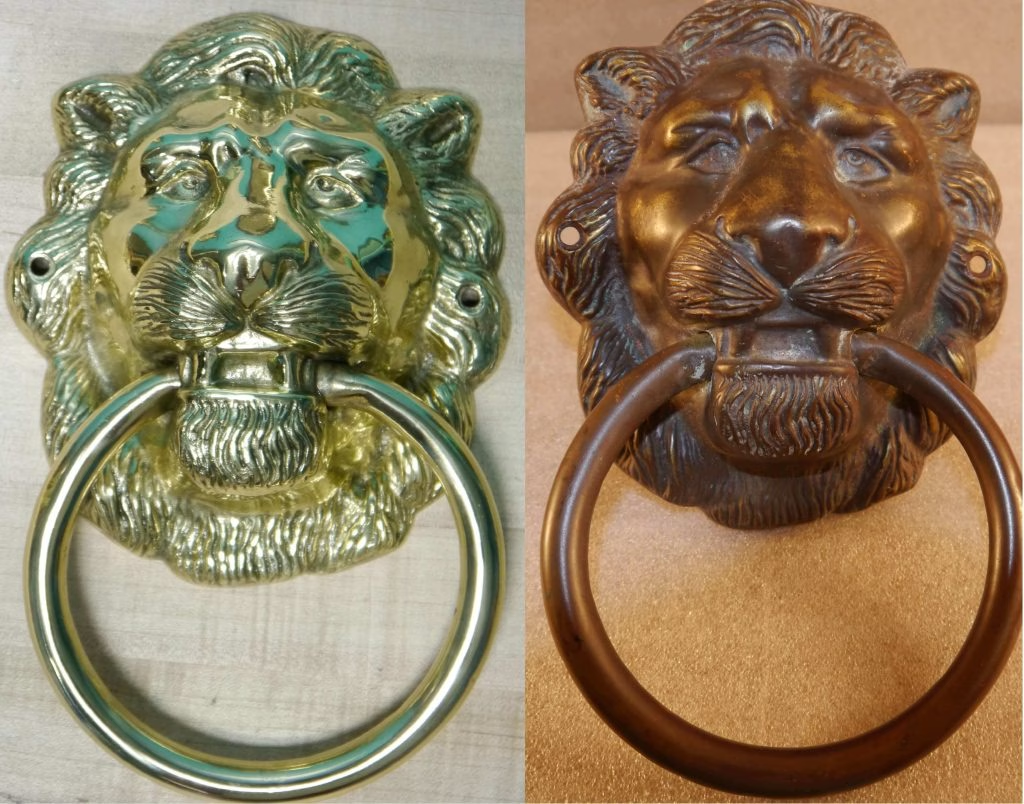
Brass is one of the most common architectural metals in commercial buildings, used for door hardware, elevator surrounds, kick plates, mail slots, signage, and decorative trim. Brass tarnishes naturally when exposed to air and moisture, developing a dull, dark patina that many building owners find unappealing. We restore brass by removing tarnish and oxidation, polishing to the desired finish level (mirror, satin, or brushed), and applying a protective lacquer coating that slows future tarnishing and makes the surface easier to maintain.
Bronze appears in doors, sculptures, plaques, railings, and decorative elements, particularly in older and more distinguished buildings. Bronze develops a natural patina over time that may be desirable (as on outdoor sculptures) or undesirable (as on interior door hardware). We can restore bronze to a bright, polished state or manage the patina to achieve a specific aged appearance. Our bronze work includes cleaning, polishing, patina control, lacquering, and wax finishing.
Stainless steel is used extensively in modern commercial buildings for elevator interiors, column covers, wall panels, countertops, and exterior cladding. Despite its name, stainless steel can develop scratches, fingerprints, watermarks, tea staining (rust-like discoloration in coastal or polluted environments), and surface corrosion. We restore stainless steel by removing scratches and surface damage, re-graining to the original directional finish pattern, and applying protective coatings where appropriate.
Aluminum is common in window frames, curtain wall systems, storefronts, and exterior cladding. Anodized aluminum can become chalky, faded, and pitted over time. Painted aluminum develops coating failure. We clean, restore, and re-coat aluminum surfaces to extend their life and improve the building’s appearance without the cost of full replacement.
Wrought iron and ornamental steel elements — railings, fences, gates, balconies, and structural features — are vulnerable to rust and corrosion, particularly in exterior applications. We remove rust and corrosion, treat the substrate with appropriate primers and inhibitors, and apply protective finish coatings. We also repair bent, broken, or missing iron elements and restore decorative details.
Copper roofing, flashing, gutters, downspouts, and decorative elements develop a green patina (verdigris) over time that may be architecturally desirable on some buildings. When copper needs to be restored to a bright finish, or when patina development needs to be managed, we clean, polish, and coat copper surfaces to achieve the desired appearance.
Architectural metalwork appears throughout commercial buildings, and each application has its own wear patterns, exposure conditions, and restoration requirements.
Elevator doors, frames, and interior panels — typically brass, bronze, or stainless steel — are among the most visible and most heavily used metal surfaces in any building. They show scratches, dents, fingerprints, and finish failure prominently. We restore elevator metalwork on-site, working around elevator schedules and building occupancy to minimize disruption.
Metal railings in lobbies, stairways, balconies, and exterior areas take constant abuse from hands, cleaning chemicals, and weather exposure. Brass and bronze railings tarnish and lose their lacquer. Stainless steel railings develop scratches and fingerprint etching. Iron railings rust. We restore railings to their original condition and apply protective systems that extend the life of the finish.
Metal doors, push plates, pull handles, kick plates, and hinges are high-touch surfaces that show wear quickly. We refinish these elements individually or as part of a building-wide metal restoration program. Hardware can often be refinished in place, but we also remove, restore, and reinstall hardware when a higher-quality result is required.
Light fixtures, sconces, register covers, signage, directory boards, and other decorative metalwork contribute to a building’s overall impression. We restore these elements to match the building’s design intent, whether that means bright polishing, satin finishing, or controlled patina development.
Building signage, address numbers, and decorative metalwork on the building exterior face weather, UV exposure, and pollution. We clean, repair, and refinish exterior metal elements and apply protective coatings designed for outdoor exposure.
Patina — the surface change that develops on metals over time through oxidation and exposure — is not always unwanted. On some buildings, particularly historic properties, a well-developed patina is an important part of the building’s character. Rose Restoration understands the difference between cleaning metal to remove patina and managing patina to achieve a specific appearance.
We work with building owners, architects, and preservation professionals to determine the appropriate approach for each project. Options include:
Polished and restored metal surfaces need protection to maintain their appearance. Without a protective coating, brass will tarnish within weeks, bronze will begin to oxidize, and stainless steel will accumulate fingerprints and watermarks. We apply protective coatings tailored to the metal type, the exposure conditions, and the maintenance capabilities of the building:
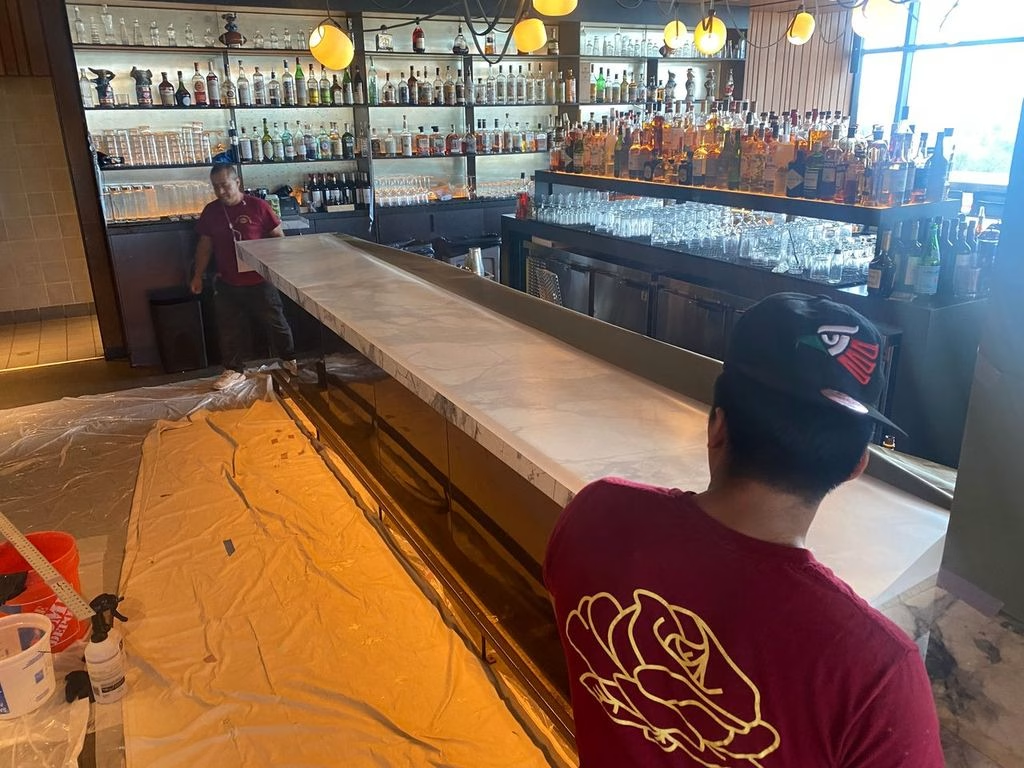
Hotels, restaurants, event venues, and hospitality spaces place particular demands on architectural metalwork. These environments feature prominent metal elements — lobby fixtures, bar tops, reception desks, elevator surrounds, and decorative lighting — that guests interact with constantly. The appearance of these surfaces directly affects guest perception and review scores.
Rose Restoration works with hospitality properties to maintain metal finishes at the standard their guests expect. We perform restoration work during off-peak hours, coordinate with hotel operations to minimize guest disruption, and provide ongoing maintenance programs that keep metal surfaces looking their best between full restoration cycles.
Many of the most architecturally significant buildings in the Washington, DC area feature historic metalwork — ornamental bronze doors, cast iron railings, copper cornices, and brass fixtures that are original to the building. Restoring historic metalwork requires understanding the original fabrication methods, the alloy composition, and the intended surface finish. Aggressive modern polishing techniques can destroy the soft edges and hand-finished surfaces that give historic metalwork its character.
We approach historic metal with appropriate care — cleaning gently, polishing by hand where necessary, repairing rather than replacing, and applying protective coatings that are reversible and compatible with the original material.
Metal restoration is not a one-time event. Even with the best protective coatings, architectural metal surfaces require periodic maintenance — cleaning, touch-up polishing, and recoating — to maintain their appearance. Rose Restoration offers scheduled maintenance programs for commercial properties that keep metal surfaces looking their best and extend the interval between full restoration projects.
A typical metal maintenance program includes:
Maintenance programs are customized to the building’s metal inventory, traffic levels, and budget. Contact us to discuss a program for your property.
Interior brass lacquer typically lasts 3 to 7 years depending on traffic, cleaning practices, and environmental exposure. High-touch surfaces like door hardware and elevator surrounds may need recoating more frequently. A maintenance program that includes periodic cleaning and inspection helps extend lacquer life and identifies recoating needs before the tarnish becomes widespread.
Yes. We match grain direction, polish level, and patina when restoring individual metal elements that are part of a larger system. On large projects, we may recommend restoring all of the metalwork in a given area to achieve the most consistent appearance.
Yes. We restore both interior and exterior architectural metalwork. Exterior metal faces additional challenges from weather, UV exposure, and pollution, and we select coatings and finishes designed for outdoor durability.
In most cases, yes. Light to moderate corrosion and pitting can be polished out or blended to produce a uniform appearance. Severe corrosion that has compromised the structural integrity of the metal may require replacement of the affected element. We assess the damage and recommend the most practical approach.
Yes. Most of our metal restoration work is performed in occupied buildings. We coordinate with building management to schedule work during off-hours, protect adjacent surfaces, and minimize dust, noise, and odor. We plan our work sequence to keep disruption as brief as possible. Contact us to discuss your project logistics.
Restore the metalwork that defines your building. Contact Rose Restoration or call 703-327-7676 for a free consultation and estimate.
Brass elevator doors, handrails, kick plates, door hardware, and decorative fixtures lose their luster through oxidation and daily wear. We polish brass to a mirror finish or satin sheen, then apply lacquer or protective coating to slow future tarnishing. For buildings that prefer the patina of aged brass, we can clean and protect without full polishing to preserve the character.
Stainless steel elevator interiors, wall panels, column covers, and fixtures develop scratches, scuffs, and fingerprint etching over time. We restore stainless steel using specialized abrasive techniques that match the original grain pattern — whether brushed, satin, or mirror finish. The result is uniform, scratch-free stainless that looks newly installed.
Bronze doors, plaques, sculptures, and architectural elements in historic and government buildings require specialized restoration to preserve their character while removing corrosion and environmental damage. We clean, polish, and protect bronze using museum-grade techniques appropriate for historically significant metalwork.
Anodized and raw aluminum window frames, curtain walls, and storefront systems oxidize and pit over time. We restore aluminum surfaces through chemical cleaning, mechanical polishing, and protective coating application. Building envelope aluminum restoration is significantly less expensive than replacement and extends the life of the system by decades.
Copper roofing, gutters, flashing, and decorative elements develop green patina (verdigris) through natural oxidation. We offer both patina removal (restoring the original copper brightness) and patina preservation (cleaning and sealing to maintain the aged character). The approach depends on the building's aesthetic goals and historical requirements.
Elevator interiors are the most visible — and most abused — metal surfaces in any commercial building. Every tenant, visitor, and delivery person sees the elevator multiple times per day. Scratched, dull, or damaged elevator metal creates a negative first impression that undermines the entire building's image.
Rose Restoration specializes in elevator metal refinishing for:
All elevator work is performed during off-hours with one cab at a time to maintain building access. Most single-elevator refinishing projects are completed overnight.
Brass polishing cost depends on the number of pieces, their size, and condition. Elevator door polishing typically runs $500–$2,000 per pair. Handrail polishing is priced by linear foot. Full-building brass restoration programs are quoted based on a site survey. Contact us for a free on-site assessment.
Yes. Scratched stainless steel can be restored to match the original grain pattern and finish. We use specialized abrasive techniques that blend repairs seamlessly with the surrounding surface. Deep gouges, graffiti etching, and widespread surface damage can all be addressed without panel replacement, saving thousands per elevator.
Unlacquered brass in high-traffic areas (elevator doors, handrails, door pulls) typically needs polishing every 3–6 months. Lacquered brass can go 2–5 years between polishing depending on traffic and UV exposure. We offer maintenance programs that schedule regular polishing to keep brass looking its best year-round.
Yes. We have extensive experience restoring architectural metal on historic and government buildings in the Washington DC area, where preservation standards require matching original finishes and using appropriate conservation techniques. We work with preservation architects, building managers, and the General Services Administration on federally owned buildings.
Rose Restoration provides architectural metal restoration, brass polishing, and elevator refinishing throughout the Washington DC metropolitan area including Arlington, McLean, Bethesda, Georgetown, Capitol Hill, Tysons, Reston, Fairfax County, Montgomery County, and all of Washington DC.
Professional stone, concrete, wood, metal, and terrazzo restoration for commercial and residential properties throughout Virginia, Maryland, and Washington DC.
9526C Lee Highway
Fairfax, VA 22031
Our team will evaluate your surfaces and provide a detailed written proposal within 48 hours. No obligation.
or call 703-327-7676
We received your request and will be in touch within 48 hours with a detailed proposal.
Questions? Call us at 703-327-7676